
Trade in goods between the European Union (EU) and the Philippines nearly hit nine billion euros in the first half of 2025, the European Chamber of Commerce of the Philippines (ECCP) reported
Speaking at the ECCP’s Doing Business in the Philippines 2026 on Thursday, Jan. 22. Ambassador Extraordinary and Plenipotentiary, Delegation of the EU to the Philippines, Massimo Santoro, highlighted that total trade between the EU and the Philippines in the first half of 2025 increased three percent to 8.3 billion euros from the same period in 2024.
“Figures are good, but the trade remains still below its full potential, and in particular when we compare to regional partners,” Santoro added.
He explained that fully realizing the agreement’s potential would require further efforts to attract more investors, particularly from the EU.
“The growth is particularly encouraging for both sides, in particular taking into account the global uncertainties that have been marking last year and continue marking this year, and taking into account the challenging international trade environment,” Santoro added.
Santoro noted that the Philippines continues to post a trade surplus with the EU, which he said underscores the growing competitiveness of Philippine exports and the strong demand from the European market.
He underscored the importance of the EU-Philippines free trade agreement (FTA) negotiations, stressing that “it’s not only about tariff reduction.” He said the FTA would establish a comprehensive framework between the EU and the Philippines, covering trade in services, investment, intellectual property, digital trade, and sustainability—areas he noted are crucial for modern, high-quality economic partnerships.
“We think that an FTA can foster shared economic growth, can bring us closer to a more prosperous and sustainable future,” Santoro added, noting that the agreement also presents significant opportunities for job creation, including additional employment prospects in the Philippines.
He also highlighted that the next full round of EU-Philippines FTA negotiations is scheduled for March this year, noting that one round was held in 2024, followed by three rounds last year.
On the EFTA-Philippines FTA, Ambassador Extraordinary and Plenipotentiary, the Royal Norwegian Embassy in Manila, Christian Halaas Lyster said that there is an increase in the utilization of the agreement.
Lyster, however, pointed out that a key challenge is ensuring exporters and importers are well informed about the agreement so they can fully utilize its benefits.
“We've seen an increase in the importation of Norwegian seafood to the Philippines. And that is also partly because of our FTA in place and the knowledge about it,” he said, “So importers, exporters know how to use it, facilitate it, and then it brings down barriers for trade between the EFTA region and the Philippines.”
He also stressed the need to continue efforts to ensure that exporters and importers in the Philippines, Norway, and other EFTA countries are well informed about the agreement and able to utilize it effectively, saying this is key to achieving higher utilization rates.
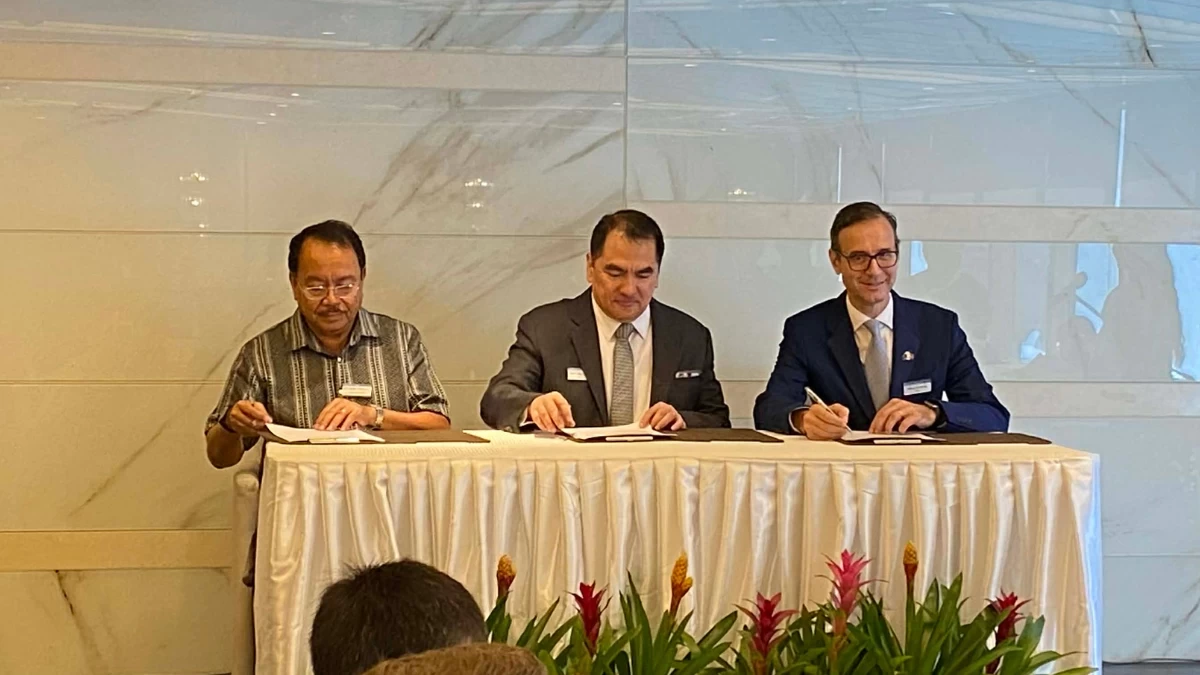
Meanwhile, the ECCP–Board of Investments (BOI)–DivinalaLaw Memorandum of Agreement (MOA) was signed to support the development of a business primer to guide investors on doing business in the Philippines.
ECCP President Paulo Duarte said the agreement is crucial in providing foreign investors with proper orientation on investing in the country, stressing the importance of collaboration between the private sector and the legal community to ensure investor protection.
He added that the partnership aims to help investors navigate potential legal questions and uncertainties, reinforcing confidence in the Philippine investment environment.
Duarte also said that, from the private sector’s perspective, the Philippines holds significant potential, noting that it is the second most populous country in Southeast Asia and underscoring the importance of translating that potential into concrete figures.
“English proficiency, that's its best, so it's not any problems,” he said, emphasizing that communication barriers are not existing. He added that this makes the Philippines particularly strong in the services sector.
“And for the Philippines, services, it's a key pillar of its industry. So looking at that, that's what also we do from the ECCP side to attract more investors to the country. We look for the potential,” Duarte said.


Serving the European-Philippine business community since 1978, the ECCP remains committed to enabling cross-sector collaboration, promoting economic growth, and championing a sustainable future. For inquiries or further information, you may contact us directly or connect with us through our official social media channels.