
AS Southeast Asia speeds toward an energy and development boom, the Philippines faces a defining policy moment: pass the Low Carbon Economy Investment Act (LCEIA) to anchor the country’s readiness for Article 6.2 of the Paris Agreement and secure a seat at emerging regional carbon markets.
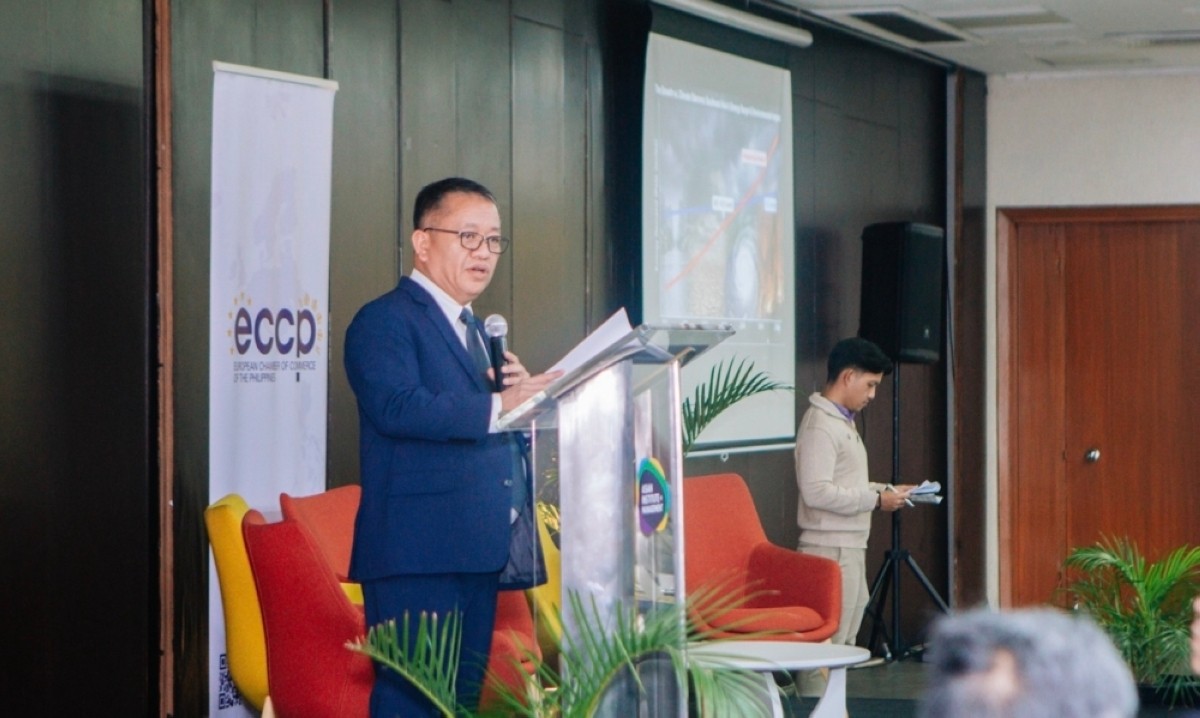
That was the consensus at the recent Asean Climate Action Dialogue, organized by the Race to Zero Philippines, the European Chamber of Commerce of the Philippines and the Global Compact Network Philippines, where Rep. Jose Manuel Alba framed the legal gap as an economic and strategic vulnerability. “We need something as soon as possible. Amendments and adjustments can be done in the future,” he said, underscoring the need for a formal national framework now rather than perfection later. Alba’s presentation and the panel discussion made two things clear: Article 6.2 international transfers of mitigation outcomes are not merely environmental instruments but are financial infrastructure. Without law and institutions, market opportunities will pass by.
What Article 6.2 requires in practice is straightforward in theory but complex in implementation: a clear host country authorization process, robust registries and tracking systems, transparent corresponding adjustments to national inventories and integrity safeguards to prevent double-counting.
Alba lays this out visually: a “high integrity bridge” connecting host countries with global buyers; and six critical readiness-building blocks like authorization policies, registries, corresponding adjustment capability, United Nations Framework Convention on Climate Change reporting infrastructure, integrity safeguards and demand side signals. The presentation flags several of these as partial or developing in Asean, with authorization and corresponding adjustments among the weakest links.
That weakness shows up in the room. Panelists from registries, finance and national governments stressed fragmentation across standards, and the practical challenges facing project developers and communities on the ground. “The critical thing is the agreements that we have with the players in the space,” said market expert Uynghiem Ngo, describing how multiple, inconsistent contracts have left landowners and Indigenous communities vulnerable to overlapping claims. Panelist Dr. Nam Nguyen warned that without clear authorization and benefit sharing rules, the state and project developers can end up at odds over who owns carbon rights, a problem the LCEIA and a companion Carbon Rights Bill aim to resolve.
Panelist and finance expert Paulo Burro was blunt about sequencing: “Once you secure an authorization risk, you can then proceed to find a buyer and off taker.” Legal clarity unlocks offtake agreements, which in turn allow mitigation outcomes to serve as collateral or attract green loans. Countries like Vietnam were cited as examples: centralized clearinghouses, separate registry authorities, and speed and trust have raised transaction volumes and investor confidence. The Philippines cannot afford to remain a patchwork of voluntary initiatives when bilateral and regional carbon corridors are forming an economic strategy.
If the LCEIA is passed, what would change? Alba positions the bill as an economic strategy as much as a climate policy: mobilize private capital, offer fiscal and regulatory incentives to decarbonize, and create a cap and invest loop that channels mandated investments into renewables, efficiency and nature based solutions. Carbon markets should be designed with financial infrastructure that mobilizes transformation rather than speculation. In this framing, the LCEIA is a “serious signal” to global investors that the Philippines intends to be an active architect of a low carbon future.
The political calculus is pressing. Alba admitted his earlier bill in the 19th Congress failed to gain Senate traction; he urged stakeholders to “join hands” and influence upper chamber priorities. Push for the LCEIA and complementary laws (carbon rights, green infrastructure) while launching pilot Article 6.2 transactions to build capacity and demonstrate integrity. Pilots, combined with clear legislation, could produce a pipeline of projects from rice paddy methane reductions, blue carbon to renewable corridors that are attractive to buyers in Europe, Japan and Singapore.
For policymakers and investors, three realities should drive the narrative. First, Article 6.2 is not a technicality but a structural change in how climate finance flows. Second, law and institutions come before large scale transactions: authorization, registries and clear carbon rights reduce investment risk. Third, integrity and community safeguards are required ethically and pragmatically: markets collapse without trust.
Representative Alba’s plea captured the urgency: “If we really want this, then all the parties involved should join hands.” The policy question is less about whether the Philippines should participate in Article 6.2 markets than what kind of participant it will be. With the right law, designed for integrity and inclusion, Manila can turn a policy gap into a competitive advantage, attracting capital, driving decarbonization and giving Filipino communities a seat at the table as their landscapes become part of a global climate solution. Without it, the region’s emerging carbon economy may simply pass the Philippines by.



Serving the European-Philippine business community since 1978, the ECCP remains committed to enabling cross-sector collaboration, promoting economic growth, and championing a sustainable future. For inquiries or further information, you may contact us directly or connect with us through our official social media channels.