
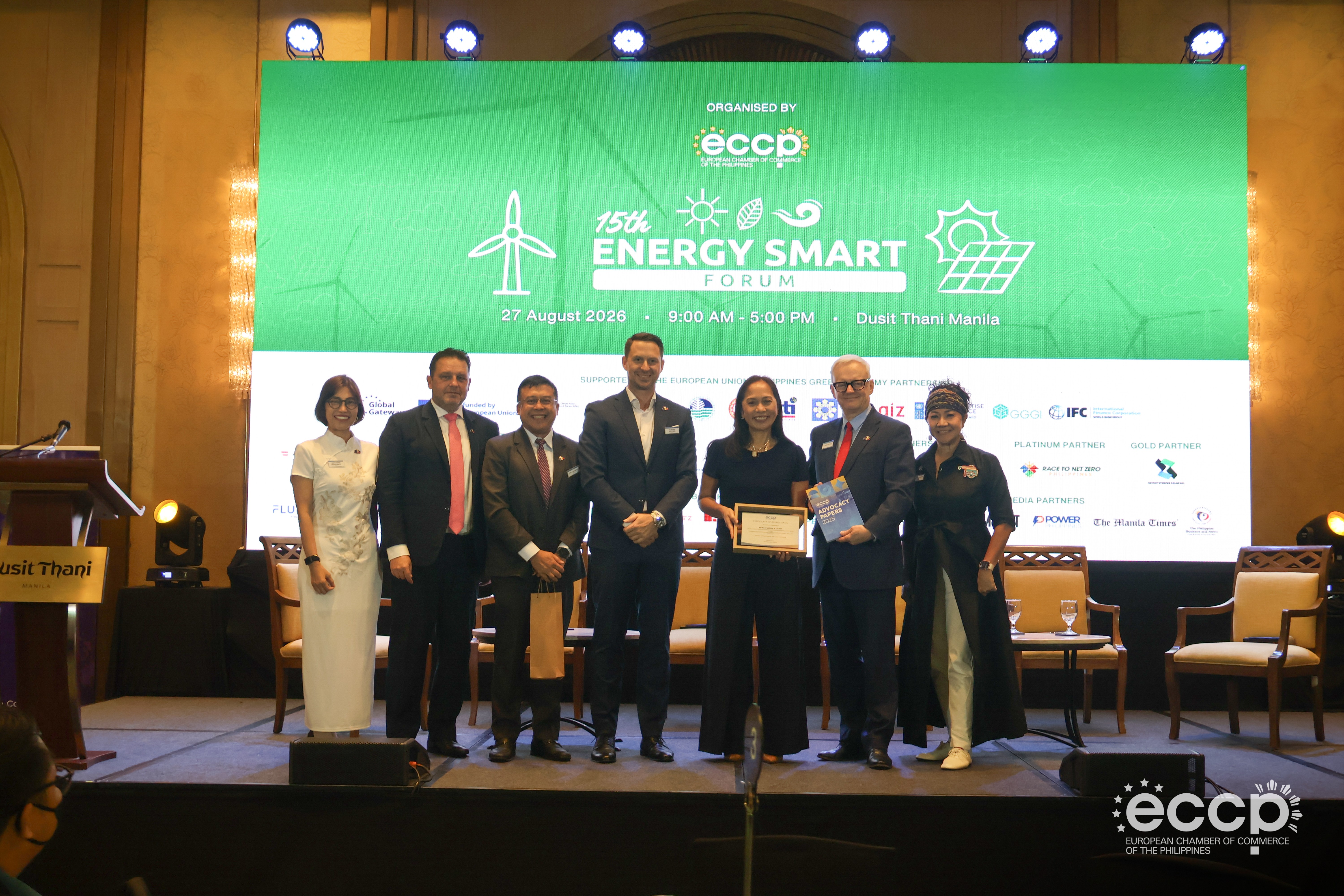
Makati City, Philippines – The European Chamber of Commerce of the Philippines (ECCP) held its 15th Energy Smart Forum on 27 August 2026, bringing together policymakers, business leaders, investors, and energy experts to discuss the policies, investments, and innovations needed to strengthen the Philippines’ energy security and advance its transition toward a more sustainable energy system.
Held under the theme “Philippine Energy at a Crossroads: Powering Resilience, Innovation, and a Just Transition,” the forum examined the country’s evolving energy landscape against the backdrop of global energy volatility, rising fuel costs, and continued dependence on imported fossil fuels. The event formed part of ECCP’s continuing efforts to facilitate dialogue between government, industry, and international partners on policies and solutions shaping the country’s energy future.
In his welcome remarks, ECCP Vice President Lars Wittig underscored the importance of collaboration in navigating the Philippines’ energy transition, while Dr. Marco Gemmer, Head of Cooperation, Delegation of the European Union to the Philippines, highlighted the shared goals between the Philippines and Europe in advancing the green transition.
Dr. Tharinya Supasa, Manager of the Sustainable and Renewable Energy Department at the ASEAN Centre for Energy, also delivered a virtual opening message highlighting regional cooperation for a resilient and renewable energy future. Her address signified regional alignment with ASEAN clean energy goals, underscoring the vital role of cross-border collaboration and joint infrastructure in accelerating Southeast Asia’s clean energy transition.
Energy leaders discuss policy priorities for a more secure energy system
Delivering the keynote message, Hon. Sharon S. Garin, Secretary, Department of Energy, outlined key policy priorities for strengthening energy security and supporting the country’s renewable energy ambitions.
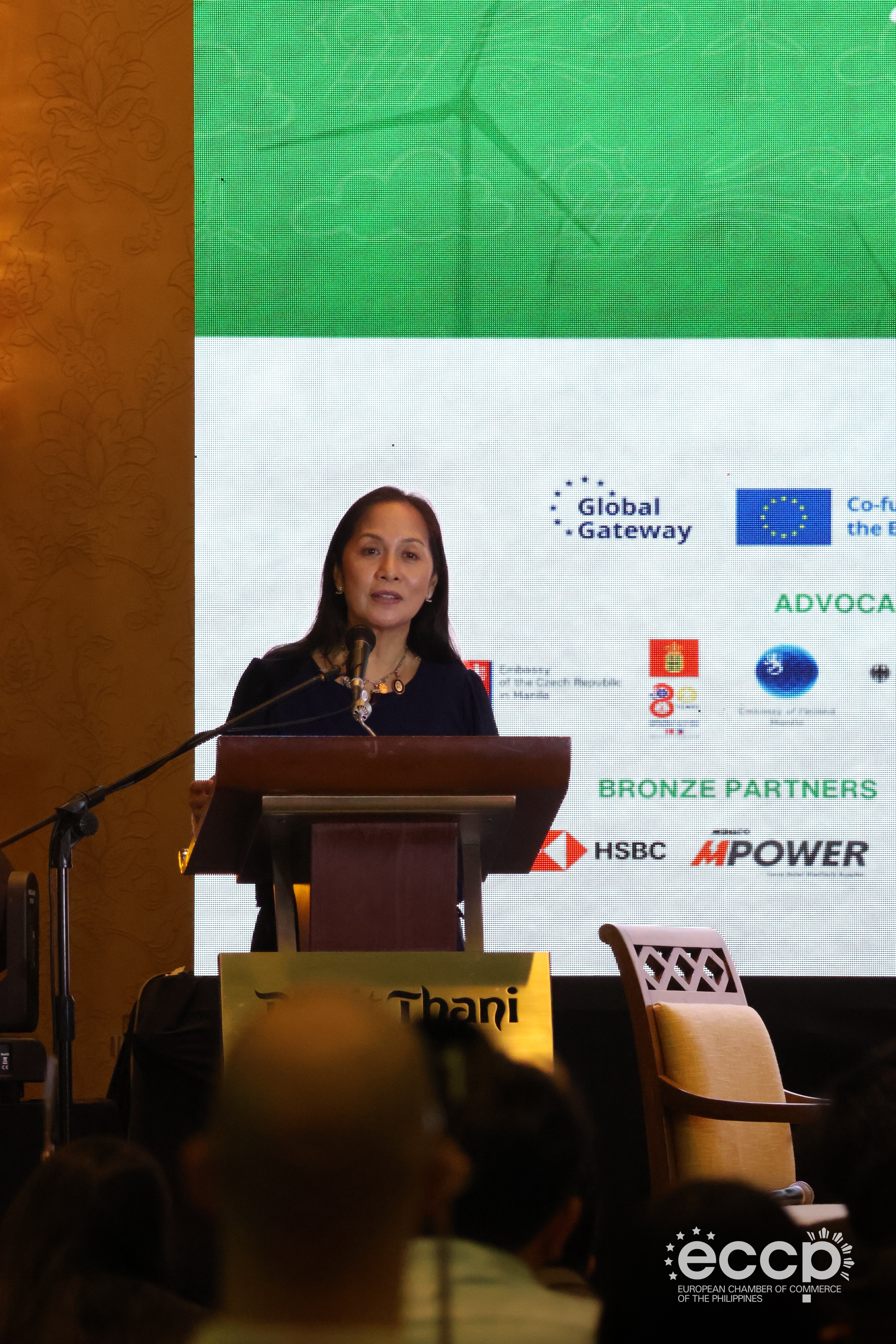 “For our part, the government will provide clear policies, efficient regulation, and an investment environment that enables projects moving forward,” said Secretary Garin.
The session also featured Atty. Nancy Aurora Q. Fajardo, Executive Director, Energy Regulatory Commission, who discussed market stability, fairness, and regulatory compliance.
“A just energy transition is not simply about moving to cleaner energy; it is about making resilience, innovation, and the energy transition accessible to everyone,” shared Atty. Fajardo.
Moderated by Atty. Jose “Jay” Layug, the panel addressed the key policy and investment reforms needed to sustain the Philippines' clean energy momentum. Department of Energy Undersecretary Rowena Cristina L. Guevara highlighted grid expansion, harmonized local permitting, and upcoming hydro and geothermal initiatives as critical priorities, while BOI Acting Director Francis M. Peñaflor noted that renewable energy accounts for 65% of BOI approvals, backed by faster incentive processing times. PIPPA President Atty. Anne Estorco Montelibano called for a capacity market and an updated grid code to ensure long-term regulatory certainty for private generators. Rounding out the discussion, Atty. Nancy A. Fajardo affirmed the Energy Regulatory Commission's push to lower consumer thresholds and streamline retail competition, while Dr. Marco Gemmer of the EU Delegation emphasized European support for Philippine-led, transparent regional and local development plans.
Investment and innovation seen as key to a reliable energy transition
The second session focused on the infrastructure, financing, and technologies needed to translate the country’s clean energy ambitions into reliable and affordable power.
In her presentation on financing flexible renewable infrastructure, Ms. Corrie D. Purisima, Treasurer and Head of Markets and Securities Services at HSBC Philippines, highlighted how recent Middle East conflicts exposed global vulnerabilities across critical commodity supply chains, underscoring that the energy transition has shifted from pure emissions reduction to maintaining power grid stability. Addressing the heightened electricity demand driven by emerging data centers, Ms. Purisima outlined HSBC's end-to-end financing framework for every stage of renewable energy assets; from development and installation to long-term operations using Poland's Baltic Power project as a blueprint for how the Philippines can mobilize structured capital to secure its renewable energy future.
Addressing the shift from ambition to implementation, Mr. Ayato Kurokawa, Senior Energy Specialist at the Asian Development Bank, highlighted the Philippines' growing reliance on imported fossil fuels as energy self-sufficiency threatens to drop to 39% by 2040. To achieve national targets of 35% renewable energy by 2030 and 50% by 2040, he emphasized leveraging the country’s world-ranking geothermal potential to secure firm, indigenous baseload power. To overcome resource exploration risks that have stalled development under EPIRA, ADB proposed the $175 million Philippine Geothermal Resource De-risking Facility (PGRDF). This is a financial intermediary loan via the Department of Finance, Department of Energy, and LandBank that covers 50% of exploration drilling costs. Designed to convert sub-loans into grants if exploration fails, the facility de-risks initial capital while ensuring valuable sub-surface data is retained, ultimately aiming to catalyze up to $1.4 billion in downstream investments, offset $177.6 million in annual LNG imports, and create 26,000 jobs.
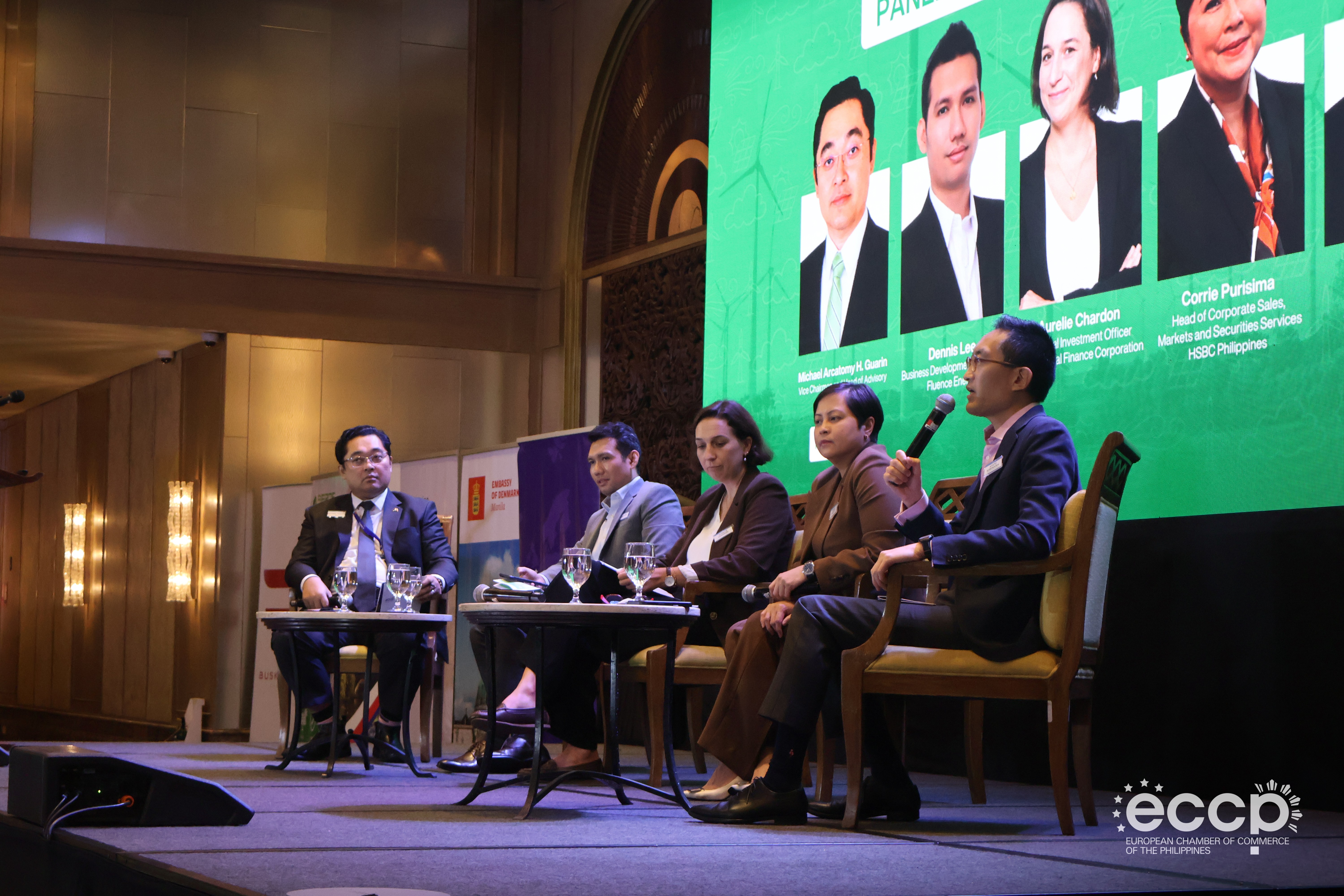
The subsequent panel discussion also brought together Ms. Aurelie Chardon, Principal Investment Officer, International Finance Corporation, and Mr. Dennis Lee, Business Development Manager, Fluence Energy, with the discussion moderated by Mr. Michael Arcatomy H. Guarin, Vice Chairman and Head of Advisory, KPMG. In this, the panel featured energy leaders calling for urgent financial and regulatory reforms to accelerate the Philippines' clean energy transition. HSBC’s Ms. Purisima highlighted the shift toward capital markets and transition bonds to connect local suppliers with global investors, while IFC’s Ms. Aurelie Chardon identified grid modernization as the primary bottleneck to project deployment. Fluence Energy’s Mr. Dennis Lee urged regulators to adapt quickly to new market innovations, and Mr. Kurokawa emphasized that overcoming complex permitting and regional grid integration requires dedicated institutional leadership.
Energy efficiency and smart infrastructure support decarbonisation
The third session examined how smarter systems and energy efficiency can help businesses reduce energy costs, improve competitiveness, and support national decarbonisation goals.
Mr. Alexander Ablaza, President, Philippine Energy Efficiency Alliance, highlighted the role of energy efficiency in accelerating industrial and commercial decarbonisation, while Atty. Monalisa Dimalanta, Senior Advisor on Energy Literacy and Energy Democracy, Institute for Climate and Sustainable Cities, discussed the integration of smart infrastructure into the energy transition.
Mr. Ablaza highlighted that “energy efficiency is no longer the clean energy underdog, and with the Philippine ESCO sector now matching the market maturity of Malaysia, Thailand, and Singapore, 2027 could launch exponential growth if we execute critical policy reforms. Following global commitments at COP28 to double energy efficiency progress, we must urgently address rising AI data center loads through self-sufficiency, cut system losses using ESCO contracting, fully enforce RA 11285 and RA 12009, expand fiscal incentives, and deploy development funds to de-risk energy service investments."
While Atty. Dimalanta complimented these insights by emphasizing that reaching our national targets of 35% renewable energy by 2030, 50% by 2040, and well over 50% by 2050 requires far more than simply adding generation, it demands building a grid truly suited for the energy system of tomorrow. A modern grid is not defined by technology alone, but by its active ability to see through real-time monitoring, predict via advanced forecasting, balance through flexible storage, respond with automated operations, and adapt to shifting demand."
The panel further featured Mr. Colin Steley, Managing Director, Stratcon, and Mr. Paulo Antonio Burro, Senior Strategy Consultant, Race to Net Zero Philippines and Member of the UNFCCC Roster of Experts, and was moderated by Ms. Ruth Yu-Owen, President & CEO, Upgrade Energy Philippines and Renewable Energy and Energy Efficiency Co-chairperson, ECCP.
In this, Atty. Dimalanta emphasized that building a modern grid requires "a flexible, responsive system capable of seeing, predicting, balancing, and adapting to changing energy demands." Turning to financing barriers, Mr. Ablaza noted that driving energy efficiency requires "making contracts far more bankable for ESCOs and Energy-as-a-Service projects" by removing uncapped liabilities that deter institutional investors. Highlighting the role of digital innovation, Mr. Steley stressed that successfully integrating new technologies means "moving away from selling a standalone product and focusing on solving problems by delivering energy as a managed service." Finally, examining corporate adoption, Mr. Burro noted that framing energy efficiency effectively relies on "moving past surface-level optics and demonstrating how decarbonization directly drives long-term cost-effectiveness and corporate performance."
Intersecting Economic Policy and Creating Green Jobs for a Clean Energy Transition
The fourth session discussed how governments, businesses, and development partners can create green jobs, attract sustainable investments, build a future-ready workforce, and strengthen community resilience while advancing the Philippines' clean energy goals.
Ms. Yu-Owen detailed the impact of the Solar Nanay Program, a community initiative that breaks traditional gender barriers by training Filipino mothers in solar panel installation, cleaning, and maintenance, providing women with dignified livelihoods while expanding community-level clean energy access. "Solar Nanay is not just a form of Corporate Social Responsibility, it is workforce infrastructure," stated Ms. Yu-Owen, emphasizing that women should never have to choose between caring for their families and building a career, and that after showing what is possible, the next task is opening these training and maintenance pathways to all.
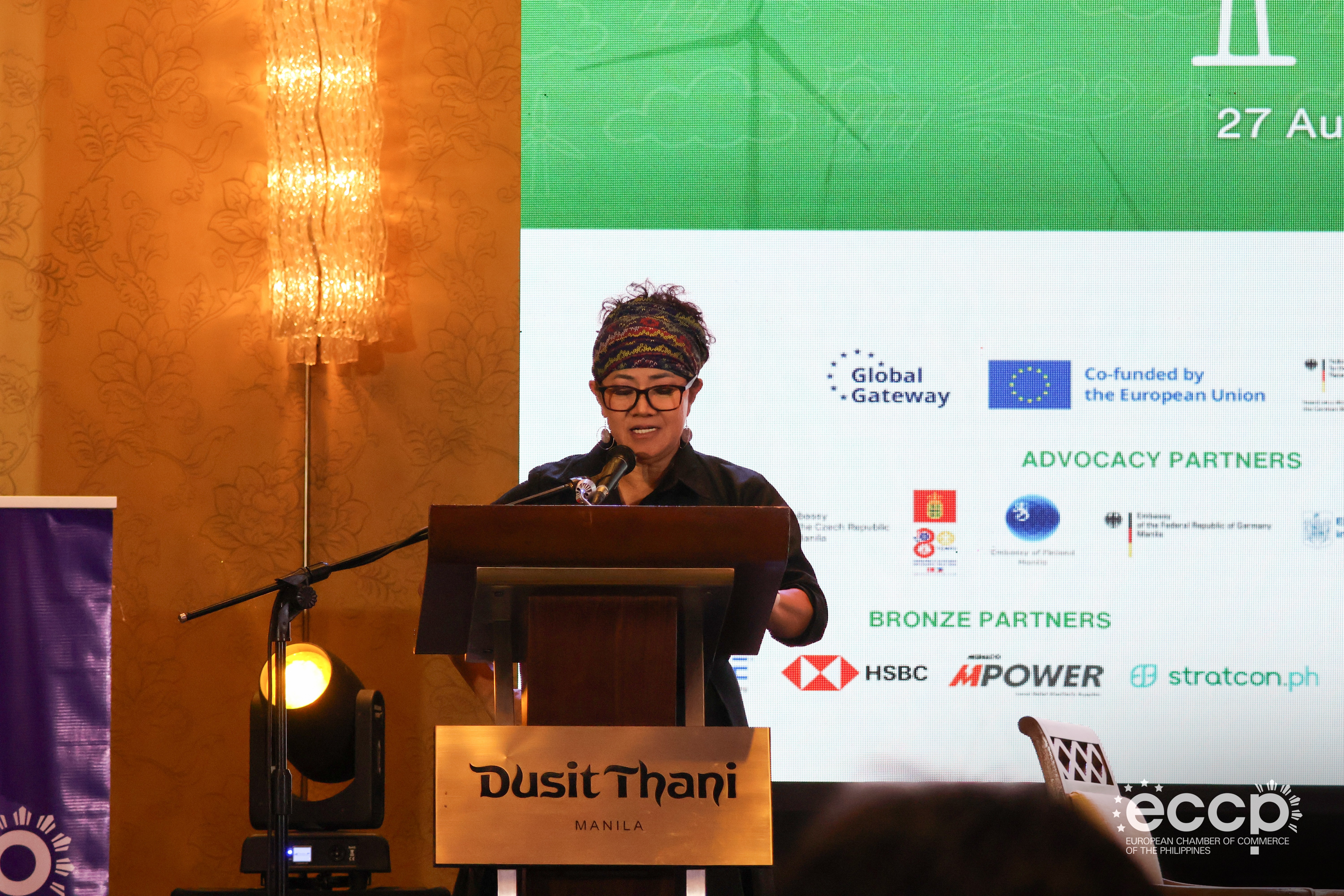
Complementing this advocacy, Ms. Pascual emphasized the ILO’s commitment to securing decent work and just transitions, stressing that scaling the country's new energy economy requires developing localized green skills, protecting worker rights, and ensuring that marginalized groups directly benefit from emerging green jobs.
The final panel discussion underscored that a successful energy transition must center on equity and human capital. Mr. Teddy Monroy emphasized UNIDO’s commitment to structural inclusion in clean energy growth, while Ms. Ruth Yu-Owen highlighted how the Solar Nanay initiative shattered gender stereotypes by proving women are equally capable of handling technical solar installations. Addressing the social challenges of the green shift, Ms. Georginia Pascual outlined the International Labour Organization's efforts to combat localized job losses, skill mismatches, and information gaps through inclusive planning, transparent communication, and community participation.
Senate President Gatchalian outlines legislative priorities for the energy sector
Closing the forum, Hon. Sherwin “Win” Gatchalian, Senate President, Senate of the Philippines, delivered a virtual closing message on legislative priorities for the energy sector, highlighting the role of policy in supporting energy security, investment, and the country’s long-term transition.
“The Philippines stands at the turning point as the global fuel crisis triggered by the US-Iran conflict exposed the risk of our continued dependence on imported fossil fuels. While immediate measures can help ease the effects of the crisis, we must pursue lasting reforms that will accelerate our shift towards more energy sources,” Senate President Gatchalian shared.
His closing message reinforced the need for sustained policy action and collaboration to ensure that the Philippines can meet its growing energy needs while building a more resilient and sustainable energy system.
Powering the Philippines’ next chapter
Across the discussions, speakers emphasised that the country’s energy transition will require more than increasing renewable capacity. Stronger policy frameworks, strategic investment, modern infrastructure, energy efficiency, and collaboration across sectors will be essential to building an energy system capable of supporting the Philippines’ long-term growth and resilience.
Through this event, the ECCP continues to provide a platform for stakeholders to exchange insights, strengthen partnerships, and advance practical solutions for the Philippines’ evolving energy landscape.
The 15th Energy Forum is supported by the EU-PH Green Economy Partnership—a €60 million priority programme of the European Union as part of its Global Gateway initiative—and the European strategy engaging with partners globally and promoting investments around shared priorities such as the transition to a green economy. A component of the programme is co-funded with a €1 million contribution from the International Climate Initiative of the German Federal Ministry for the Environment, Climate Action, Nature Conservation, and Nuclear Safety and implemented by the Deutsche Gesellschaft für International Zusammenarbeit (GIZ). Further components are implemented by UNDP Philippines, Expertise France with the Global Green Growth Institute, and the International Finance Corporation.
The event is also made possible by Advocacy Partners: Embassy of Ukraine in the Republic of the Philippines, Embassy of the Republic of Austria in Manila, Embassy of Romania in Manila, Embassy of the Czech Republic in Manila, Embassy of the Kingdom of Denmark in Manila, Embassy of the Republic of Finland in Manila, Embassy of the Federal Republic of Germany in Manila, and Embassy of the Republic of Slovenia in Manila; Industry Partners: Philippine Energy Efficiency Alliance (PE2); Energy Lawyers Association of the Philippines (ELAP); Independent Electricity Market Operator of the Philippines (IEMOP); Semiconductor and Electronics Industries in the Philippine Foundation Inc. (SEIPI); Platinum Partner: Race to Net Zero Philippines; Gold Partner: Advent Upgrade Solar Inc.; Bronze Partners: FLUENCE, HSBC, MPower, and Stratcon; Booth Partners: Berde Renewables, EDMI Philippines Inc., Phoenix SUPER LPG Philippines, Inc., and Buskowitz Energy Inc.; and Media Partners: BusinessMirror, iMPACT, Power Philippines, The Manila Times, and The Philippine Business and News.


Serving the European-Philippine business community since 1978, the ECCP remains committed to enabling cross-sector collaboration, promoting economic growth, and championing a sustainable future. For inquiries or further information, you may contact us directly or connect with us through our official social media channels.