
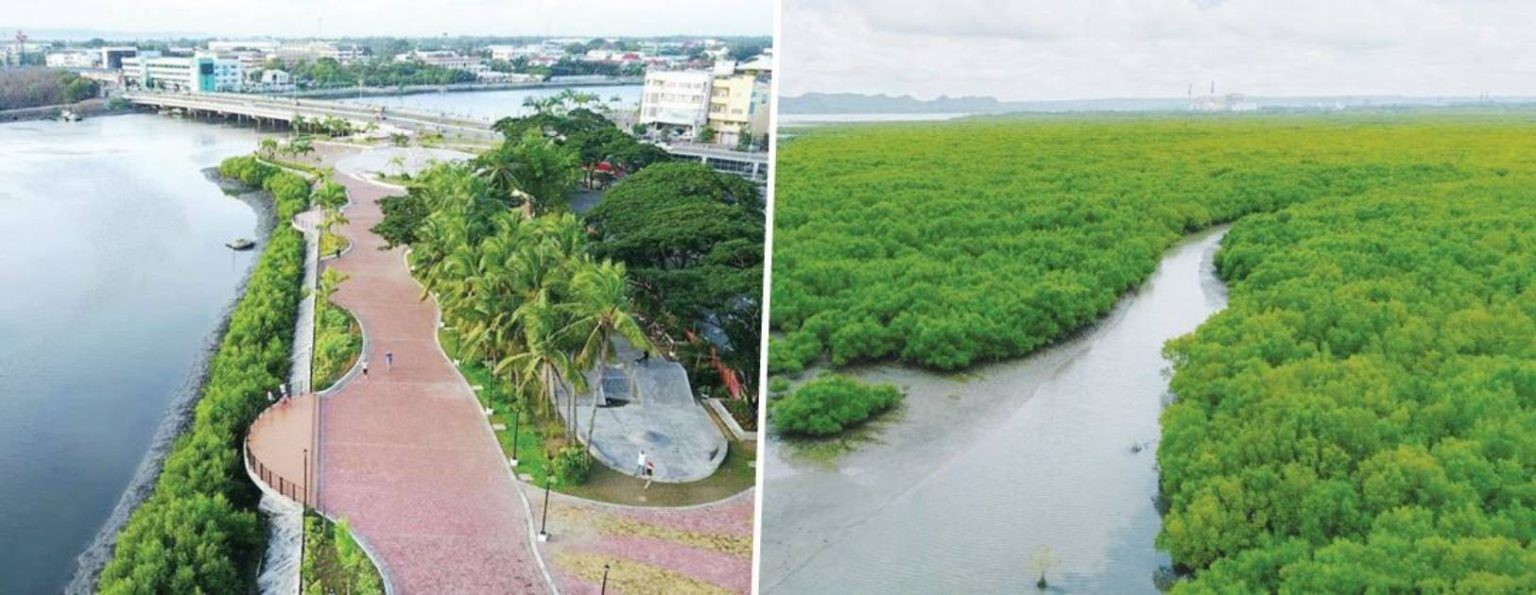
ILOILO City – For its sustained leadership in mangrove rehabilitation, river restoration, and integrated urban sustainability planning, Iloilo City has been recognized as a Generation Restoration Role Model City under the United Nations Decade on Ecosystem Restoration (2021–2030).
The recognition highlights Iloilo City’s long-term commitment to restoring ecosystems as a foundation for climate resilience, public well-being, and sustainable urban development.
It also positions Iloilo as a global learning and demonstration city to share its proven and scalable practices with other cities worldwide.
Mayor Raisa S. Treñas emphasized that the recognition affirms the city’s local initiatives as effective, sustainable, and guided by a clear vision for a greener future.
She also called on every Ilonggo to play their part in protecting the environment, from the barangay level to citywide efforts, to ensure long-term sustainability.
“Kalakip sa aton mga inisyatibo nga nangin successful, nga sa karon nagahatag sang espasyo for health and wellness sa mga Ilonggos, and has brought us pride and honor, amu ang pag-rehabilitate sang Iloilo River kag pagsagod sang aton mga mangroves bilang proteksyon sini. To preserve and protect ang aton dunang-manggad for use of generations to come was our sole objective, sa diin ang aton mga tikang natalupangdan kag subong ginakilala na sa kalibutan,” said Mayor Treñas.
As a coastal and climate-vulnerable city, Iloilo faces rising sea levels, storm surges, flooding, intensifying typhoons, and increasing heat and drought. Rapid urbanization has also placed pressure on mangrove ecosystems and waterways, compounded by wastewater discharge and plastic pollution.
In response, Iloilo City has made ecosystem restoration a core pillar of its development strategy. Since 2010, the city has planted more than 100,000 mangroves along the Iloilo River, restoring approximately 70 hectares of mangrove ecosystems, with protection efforts now covering nearly 80 hectares of riverside areas.
Mangrove rehabilitation is a central component of the Iloilo–Batiano River Preservation Program, a long-term, multi-stakeholder initiative supported by national government agencies, local communities, civil society organizations, the private sector, and international partners, including the Japan International Cooperation Agency (JICA).
One of the program’s flagship outcomes is the 12-kilometer Iloilo River Esplanade Corridor, which integrates river rehabilitation with inclusive public access to green and blue spaces. Nature-based solutions implemented along the river include regular clean-ups, silt removal, wastewater treatment, the removal of illegal structures and fish pens, and sustained mangrove planting. The program also involved the relocation of approximately 5,000 informal settler families to safer housing areas, significantly reducing flood risks and water pollution.
These efforts have led to measurable ecological recovery, including increased diversity of fish, plankton, and crustaceans, as well as the return of rare species such as the freshwater emerald shrimp.
Iloilo City’s restoration initiatives are guided by the its overarching sustainability framework that integrates nature-based solutions into land use planning, climate action, disaster risk reduction, mobility, public health, and economic development. This approach is institutionalized through key planning instruments such as the Comprehensive Land Use Plan, Urban Biodiversity Management Plan, Integrated Coastal Resource Management Plan, and Local Climate Action Plan.
Beyond ecosystem restoration, Iloilo City is advancing low-carbon mobility, renewable energy, circular economy initiatives, urban greening, and climate-resilient infrastructure.
The city is the first in the Philippines to complete a Local Public Transport Route Plan (LPTRP), embedding active and low-emission transport into its urban development strategy.
Solid waste management reforms are being strengthened through initiatives such as Project AGUBAY, which deploys a Solid Waste Management Information System across all 180 barangays, and the development of an Integrated Solid Waste Management Facility that will process up to 400 tons of waste daily, converting waste into energy to power a desalination plant supplying potable water to the city.
Through programs such as “Green Meets Great”, Iloilo City is also positioning itself as the country’s first Green MICE City, integrating renewable energy use, waste reduction standards, paperless systems, and bike-friendly mobility into the tourism and events sector.
Meanwhile, Project TRANSFORM is expanding urban greenery and nature-based solutions to improve air quality and regulate urban temperatures through a whole-of-community approach.
As a Generation Restoration Role Model City, Iloilo City demonstrates how strong governance, long-term vision, and nature-based solutions can restore ecosystems while improving resilience, livelihoods, and quality of life—offering a replicable model for coastal and rapidly urbanizing cities worldwide.
On the other hand, Iloilo City recently received two additional awards for environmental sustainability. The city was honored, for the second time, with the ASEAN Clean Tourist City Award, reflecting the local government’s sustained efforts to maintain a clean, green, and sustainable metro—an achievement made possible through strong public cooperation.
It also received the 2025 Europa Awards in the Green LGUs (Waste Management) category, conferred by the European Chamber of Commerce of the Philippines. The recognition underscores the city’s unwavering commitment to responsible, innovative, and sustainable waste management practices.



Serving the European-Philippine business community since 1978, the ECCP remains committed to enabling cross-sector collaboration, promoting economic growth, and championing a sustainable future. For inquiries or further information, you may contact us directly or connect with us through our official social media channels.