
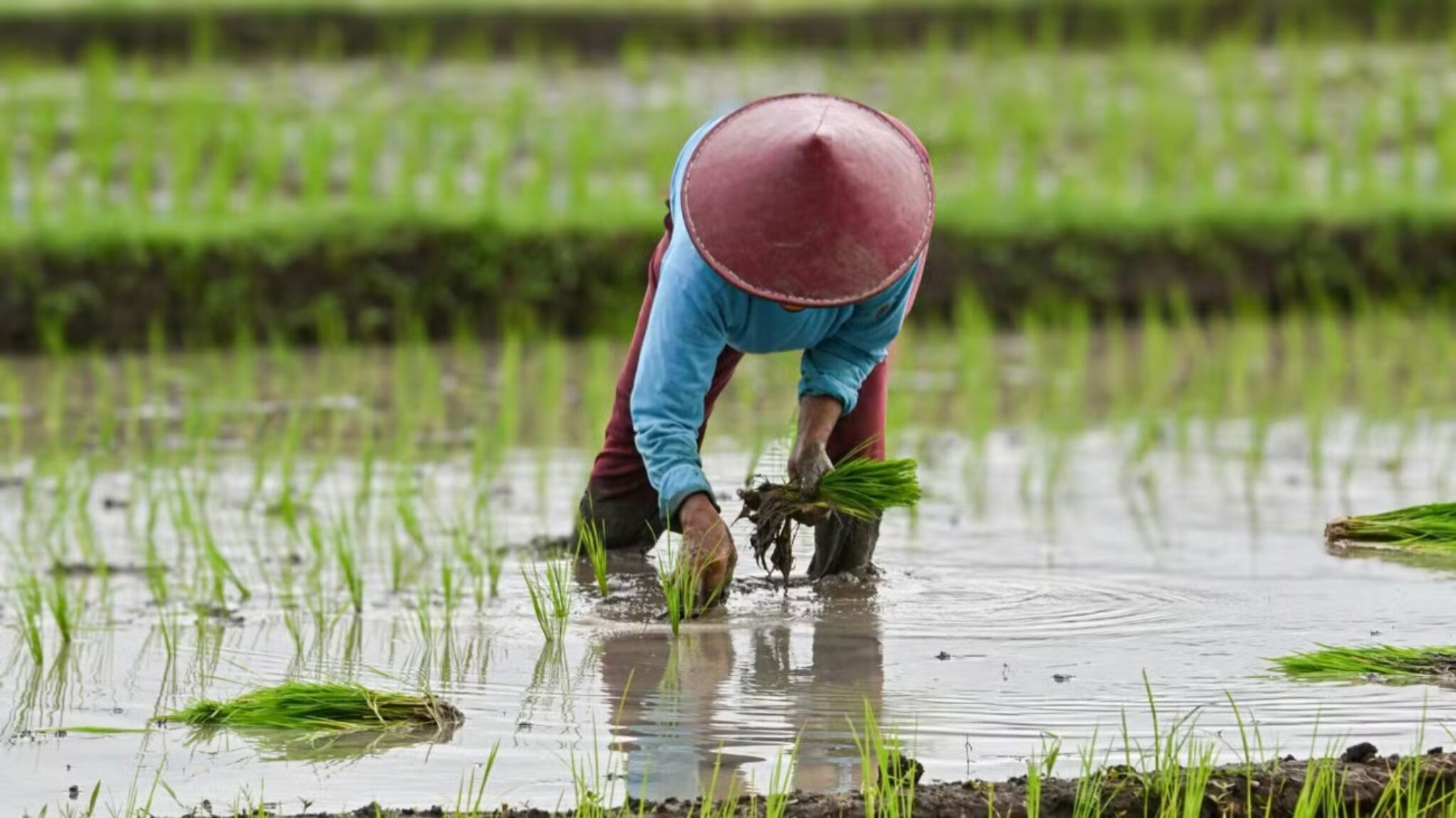
Up to 40 percent of agricultural produce in the Philippines never reaches consumers, a problem European and Asean business leaders said on Wednesday reflects the urgent need for investments in cold storage, logistics, and climate-resilient farming systems.
At the inaugural Asean-EU Sustainability Summit in Cebu, European Chamber of Commerce of the Philippines (ECCP) President Paulo Duarte warned that massive post-harvest losses would continue to undermine food security, farmers’ incomes, and long-term agricultural sustainability across the region.
“In the Philippines alone, post-harvest losses still average 30 to 40 percent,” Duarte said during his opening remarks before government officials, diplomats, and business leaders gathered for the summit.
He said the losses exposed not only inefficiencies in the country’s food supply chain, but also “a major untapped opportunity” to improve productivity and stabilize food systems through modern technology and infrastructure.
The summit, jointly organized by the EU-Asean Business Council and the ECCP, gathered around 200 leaders from government, industry, and development institutions in Cebu ahead of the 48th Asean Leaders’ Summit under the Philippines’ Asean chairmanship.
Organizers positioned the gathering as a platform for Asean and European partners to strengthen cooperation on energy transition, climate resilience, sustainable trade, circular economy initiatives, and green investments.
Food losses, rising prices
Previously, Agriculture Secretary Francisco Tiu Laurel Jr. said that around 30 percent of the country’s agricultural produce went to waste because of poor logistics and inadequate post-harvest facilities.
The agriculture chief said weak cold-chain systems and inefficient transport networks continued to drive up food prices, especially for vegetables and other high-value crops.
“If we can lessen, or hopefully almost eliminate, those losses, that will be equivalent to at least 10 to 15 percent less cost for our vegetables and high-value crops like fruits,” Tiu Laurel earlier said.
He also revealed that the country loses around 450,000 metric tons of rice yearly due to the lack of major post-harvest facilities.
For ordinary consumers, the impact often surfaces in higher market prices, unstable food supply, and wasted produce that never reaches dining tables despite strong harvests from farmers.
For farmers, especially in provinces heavily dependent on agriculture, losses during transport and storage directly cut already-thin earnings.
Cebu pushes ‘future-ready’ development
Cebu Governor Pamela Baricuatro used the summit to position Cebu as a province pursuing “sustainable, resilient, and inclusive” growth amid rising climate and economic pressures.
“Cebu is now positioning itself as a province ready for the future—one that understands that real progress must also be sustainable, resilient, and inclusive,” Baricuatro said.
She cited ongoing provincial efforts to strengthen climate-resilient infrastructure, improve flood and water management systems, pursue sustainable energy projects, and implement responsible waste management initiatives.
Baricuatro also linked sustainability efforts to governance and public services, saying the province continued to invest in food security, healthcare, transparency, and digital governance.
“Sustainability is not only about the environment. It is also about building communities that are prepared, empowered, and trusted by the people they serve,” she said.
Energy, circular economy
Beyond agriculture, summit discussions also focused on energy security and the shift toward renewable energy as Asean countries confront rising energy costs and supply disruptions.
Duarte said initiatives such as the proposed Asean Power Grid could help improve regional energy security while accelerating renewable energy integration across Southeast Asia.
“European companies are ready to invest, bring technology, and support Asean’s transition toward a cleaner, more resilient, and more competitive energy future,” he said.
He also pushed for stronger adoption of circular economy practices, urging governments and industries to move away from a “use-and-dispose culture” toward systems centered on reuse, recycling, repair, and resource efficiency.
According to Duarte, scaling sustainability projects across Asean will require faster and more transparent permitting systems to avoid delays in green investments.
“We can have the best technologies and investment opportunities, but if projects are delayed for years by administrative bottlenecks, progress will remain too slow,” he said.
EU-Philippines trade talks
The summit also highlighted ongoing negotiations for a Philippines-European Union free trade agreement, which business groups described as crucial in expanding green investments and sustainable economic cooperation.
Duarte said stronger EU-Philippines trade ties could improve market access, strengthen supply chains, and accelerate investments in renewable energy, agriculture modernization, and sustainable industries.
Duarte said the Asean-EU partnership extended beyond trade relations and increasingly centered on long-term sustainability and economic resilience.
“Europe brings technology, innovation, and capital. Asean brings growth, talent, and dynamism,” he said.
“Together, we have the opportunity to build one of the world’s most important sustainable growth partnerships,” he said. /dl
Source: INQUIRER.net



Serving the European-Philippine business community since 1978, the ECCP remains committed to enabling cross-sector collaboration, promoting economic growth, and championing a sustainable future. For inquiries or further information, you may contact us directly or connect with us through our official social media channels.